HIRIKETIYA: The beach will make you question every resort you ever booked.
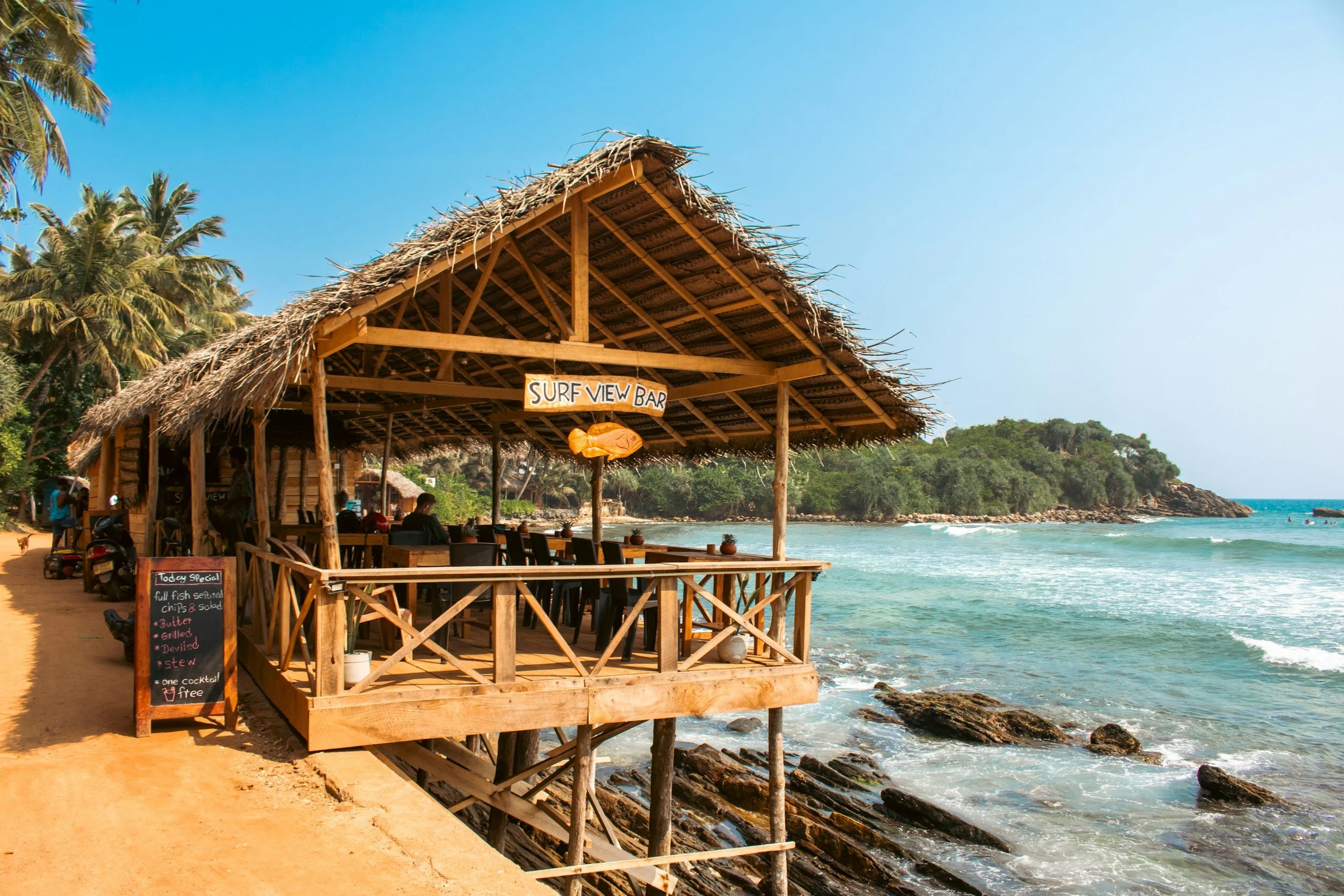
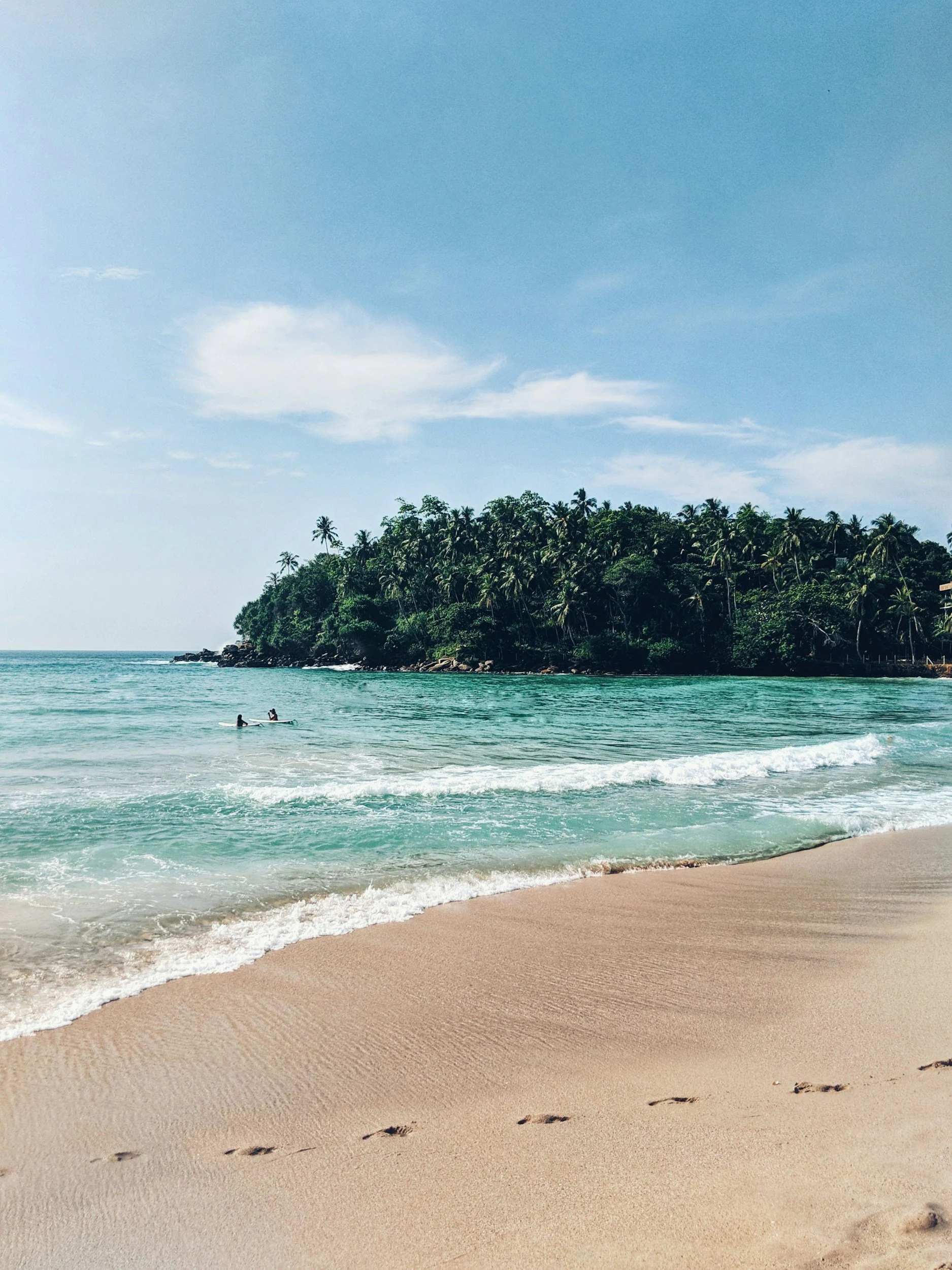
A horseshoe bay on Sri Lanka's south coast. Beginner surf, fresh coconuts, and children who fall asleep sun-warm and sandy. Here's why it belongs on your list — and why it's easier with kids than you think.
There is a particular kind of place that ruins you for normal holidays. Hiriketiya is one of them.
It sits on the southern coast of Sri Lanka, about three hours from Colombo — a small, sheltered horseshoe bay framed by palm trees and backed by dense jungle. It was, not long ago, a quiet fishing village. It is now something rarer: a place that has grown in reputation without losing its soul. The cafés are good. The surf is gentle enough for beginners. The pace is unhurried in a way that genuinely seeps into you after a day or two.
And it is, despite what you might assume, wonderful with children.
The bay's horseshoe shape shelters the water. Waves break at a height that delights a six-year-old and doesn't terrify a parent. By the second morning, your children will have identified which café does the best roti and will want to go back every day. You will let them.
WHAT TO EXPECT
Hiriketiya operates at a single speed: slow. The beach is walkable end to end. Everything — food, surf hire, a cold juice, a yoga class — is within a few minutes on foot. There are no organised activities, no kids' clubs, no entertainment directors with lanyards. What there is instead is time, and space, and the particular freedom that comes from a place that doesn't try too hard.
The food scene has grown quietly excellent. Fresh seafood, Sri Lankan curries, smoothie bowls for children who've decided they're surfers now. The Roti Hut does exactly what its name promises. The beach bus — a bright yellow converted vehicle right on the sand — serves local dishes with a view of the waves and is an immediate hit with anyone under ten.
Further afield, Rekawa Beach is a short drive for sea turtle nesting sites — one of those experiences that lands differently when you watch it through your child's eyes. The Dondra Lighthouse, the southernmost point of the island, is worth the tuk-tuk ride for the views alone.
MY STORY
Most parents who haven't been to Sri Lanka imagine it as complicated — hot, chaotic, hard to navigate with children. Some of that is true, and worth preparing for. But Hiriketiya specifically is as easy as it gets. Everything is walkable. Locals are genuinely warm toward children. The pace of life means that if your toddler needs an impromptu nap, the afternoon will simply rearrange itself around that fact.
The heat is real, and needs managing — earlier starts, long lunches in the shade, afternoons in the water. But a family that has thought about this in advance will find Hiriketiya not just manageable, but quietly magical.
The goal isn't to find a place that removes all the unpredictability. It's to find one where the unpredictability is the kind you enjoy.
Hiriketiya is that place.
THE SHIFT IN PERSPECTIVE:
UBUD: why Bali’s cultural heart belongs on every family’s list — not instead of the beach but before it.
Rice terraces, temple incense, morning markets and four of us on a single scooter. Ubud is loud, layered and entirely alive — and children, it turns out, are exactly the right people to experience it with.
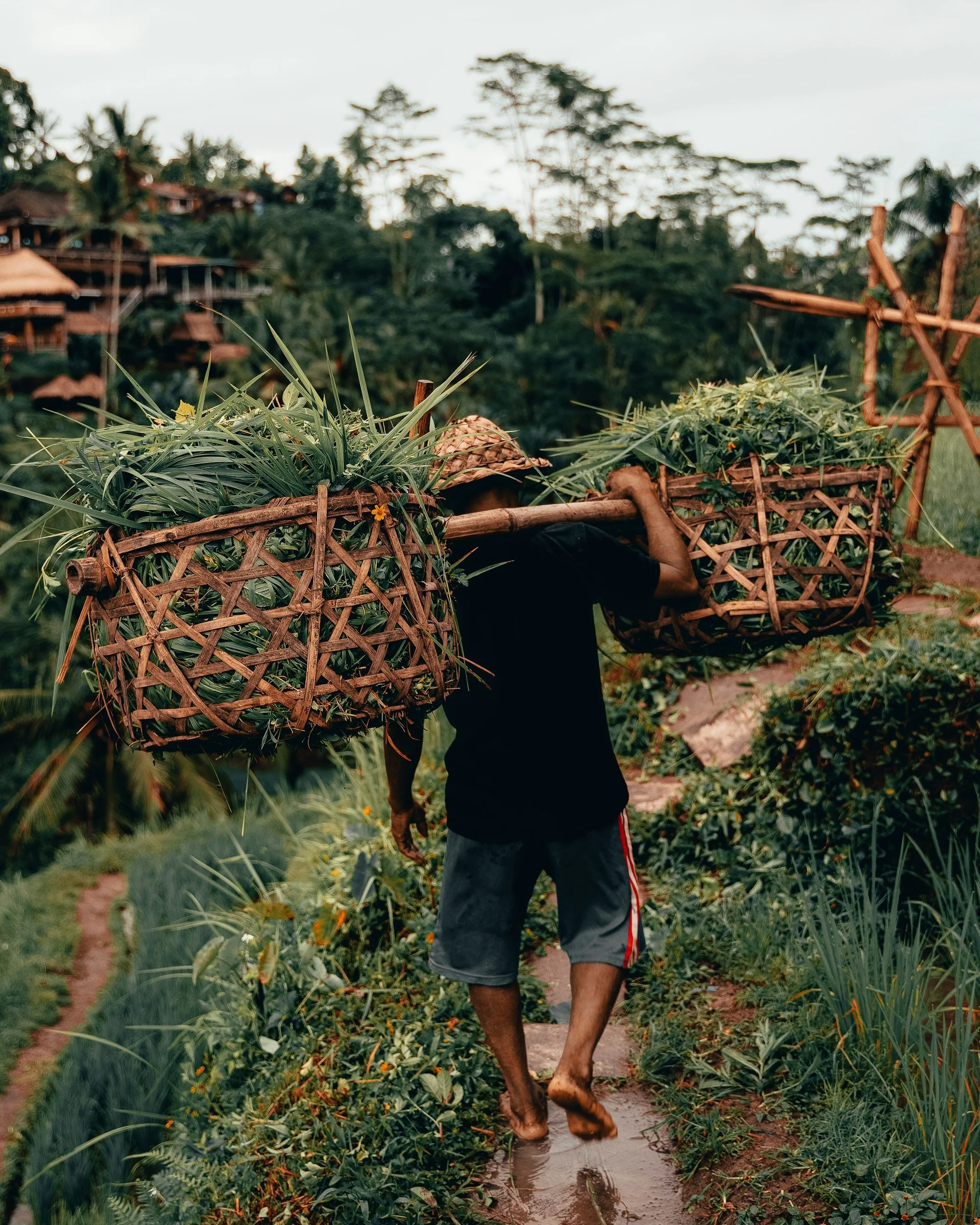
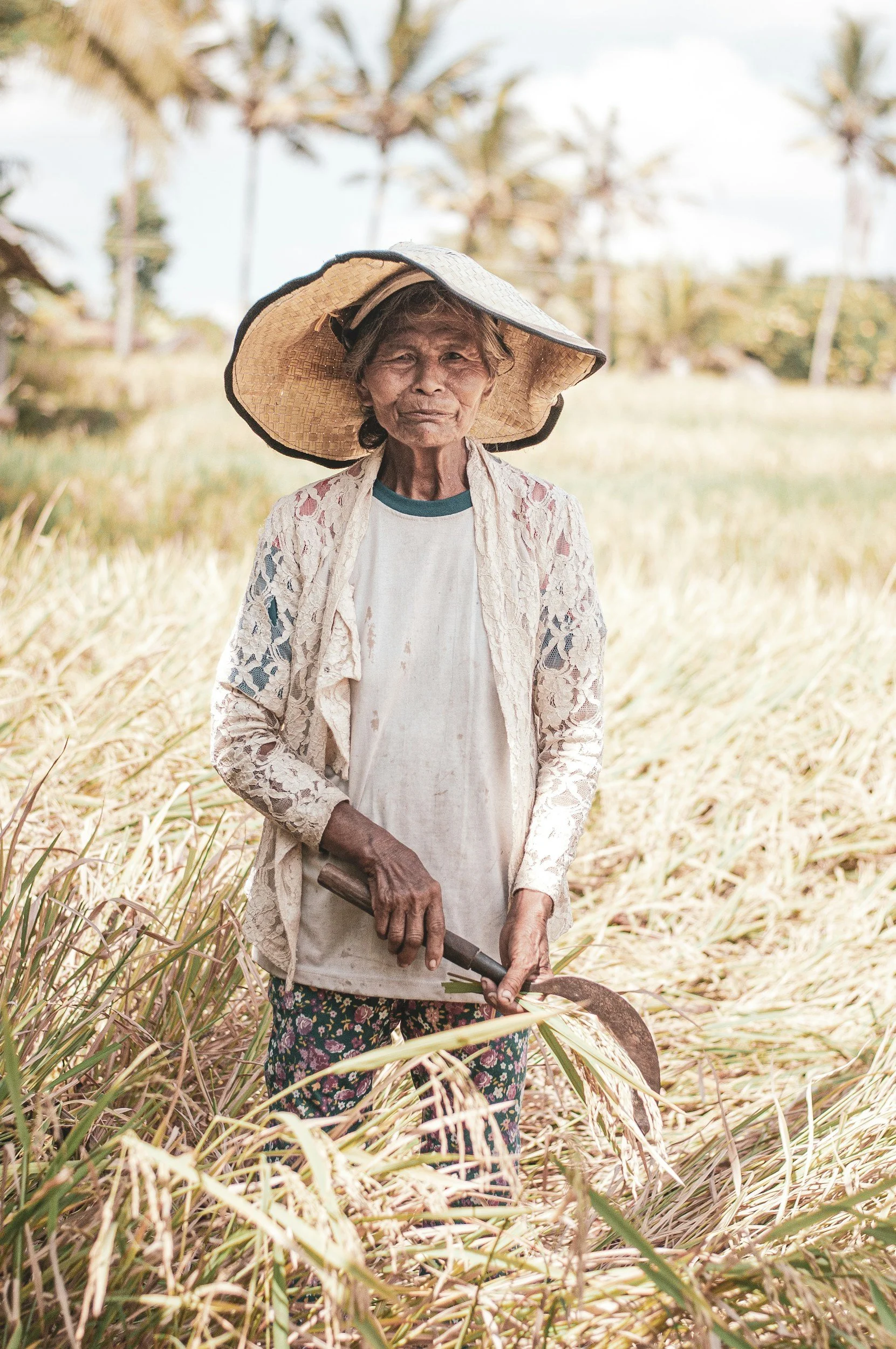
Ubud has a reputation problem. For a certain kind of traveller it will always be the place from Eat, Pray, Love — a wellness destination, a retreat, somewhere people go to find themselves over a green juice and a sound bath. That version of Ubud exists, and you're welcome to it.
But there is another Ubud entirely. And the best way to find it is to arrive on a scooter with your children, no fixed plan, and a willingness to follow whatever the morning decides to offer.
The four of us on a single scooter, weaving through streets that smelled of frangipani and two-stroke engines, past temple walls draped in black and white checked cloth, past women balancing offerings on their heads as though the entire spiritual life of the island were simply another errand to run.”
Both of my children took to Ubud immediately. The chaos suited them in a way that calmer, more manicured destinations never quite do. There was too much to look at. Too much happening. A dog sleeping in a doorway, a gamelan rehearsal drifting through an open gate, a man on a motorbike carrying what appeared to be an entire tree. The city is relentlessly, generously itself — and children, who have not yet learned to filter the world into manageable portions, receive all of it at full volume.
THE MARKET
We went early, before the tourist market had taken over and while the morning stalls still belonged to the people who actually live here. This is Ubud as it has always been: trucks unloading produce before dawn, flowers for temple offerings stacked in great fragrant piles, the business of daily life conducted at full noise.
My children stood at a stall and watched a chicken being prepared for the day's cooking — held, quickly, mercifully, by hands that had done this ten thousand times before. There was no theatre to it, no cruelty. Just an honest and ancient transaction between a family and its food, the kind that most children in Europe will never witness and probably should. They watched in silence. Then the older one asked where our chicken came from at home, and we had a conversation I hadn't planned for and won't forget.
Later, at a fish pond near the edge of the market, both of them fed fish from their palms — delighted, shrieking, entirely present. The juxtaposition of those two moments, death and abundance and life continuing regardless, is something only a place like this can offer. No resort activity programme comes close.
This is what travel in places like Ubud gives children that a beach holiday cannot: an encounter with the world as it actually is. Not curated for them. Not softened. Just real, and therefore genuinely extraordinary.
MY STORY
Ubud's reputation precedes it in the wrong direction. Parents who haven't been tend to picture incense, yoga retreats and influencers in linen — a destination for people who are, conspicuously, not travelling with a six-year-old and a toddler. The assumption is that Ubud is either too spiritual to be practical, or too chaotic to be safe, or somehow both at once.
Neither is true. What Ubud actually is, once you get past the wellness industry that has draped itself over it, is an ancient, working, deeply community-rooted town — one where children are welcomed not as a complication but as a natural part of life. The Balinese relationship with children is woven into the culture at every level. Yours will not be tolerated. They will be genuinely received.
The heat and the traffic need managing, as they do anywhere in Southeast Asia. But a family that has thought about this in advance — earlier starts, long midday pauses, an afternoon in the pool — will find that Ubud gives back far more than it asks. The chaos, as it turns out, is exactly the point.
THE SHIFT IN PERSPECTIVE:
Kamalame Cay: the Bahamas nobody talks about, and exactly the reason you should go.
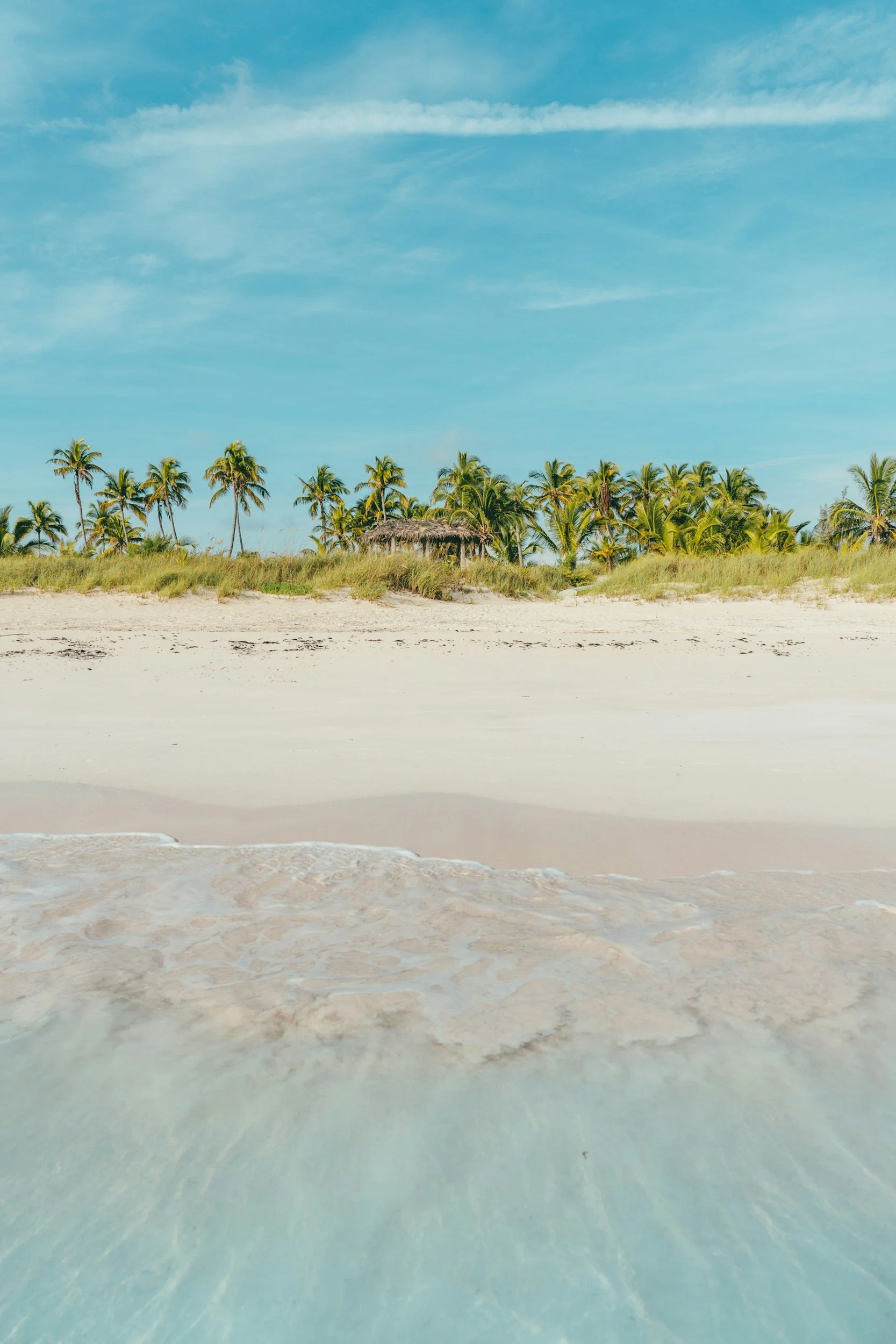
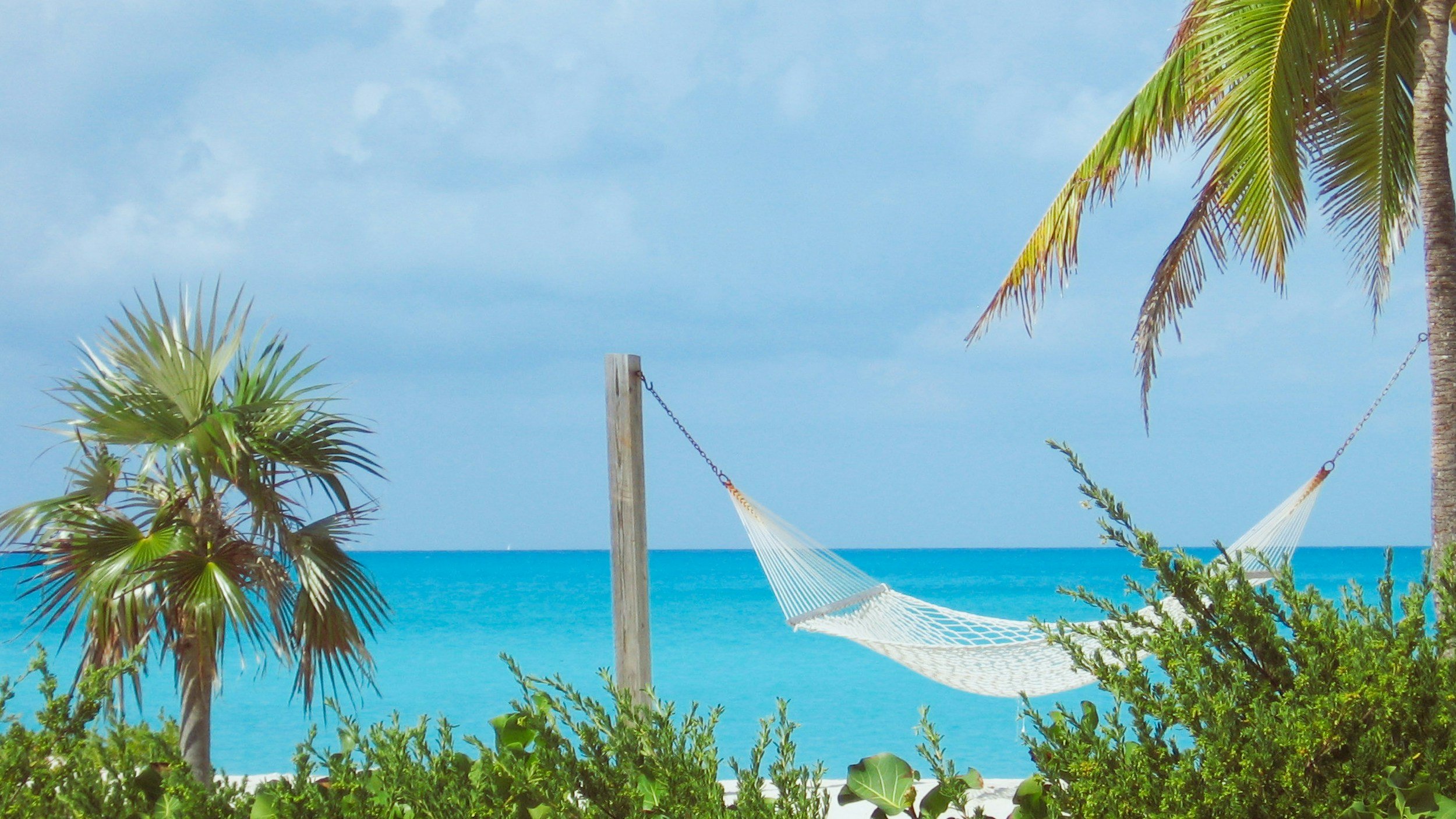
A tiny prop plane out of Nassau, 96 acres of private island, no cars, no agenda — and two children who understood immediately that this was something different. Some places make freedom feel like a concept. Kamalame makes it feel like a golf cart with the wind in your hair.
Most people who think about the Bahamas picture Nassau. The cruise ships, the casinos, the carefully packaged version of Caribbean life served up to several thousand visitors at once. It is fine, in the way that things designed for maximum throughput are fine. But it is not this.
Kamalame Cay sits just off the coast of Andros — the Bahamas' largest island, and its least visited. To get there from Nassau you board a prop plane, small enough that the children press their faces to the windows for the entire fifteen-minute flight, watching the ocean shift through every shade of blue and green that exists before dissolving into the white sand outline of the island below. It is, before you've even landed, one of the most quietly spectacular arrivals I've experienced anywhere.
The moment the plane touches down and you step out into the warm, unhurried air of Andros, something in your family recalibrates. The pace changes. The noise drops away. And then someone hands your children the keys to a golf cart, and everything else becomes secondary.
There are no cars on Kamalame Cay. Ninety-six acres of bougainvillea-draped paths, three miles of beach, and the only way to move through any of it is on foot or by golf cart. For children this is, straightforwardly, paradise. For parents it is something more nuanced — the rare experience of watching your children roam freely through a beautiful place, without the low-level anxiety that cars and crowds and logistics tend to produce.
THE ISLAND AT ITS OWN PACE
Kamalame is family-owned, and it shows in the way the place holds itself. There is no entertainment programme, no activity coordinator with a clipboard, no sense that enjoyment needs to be organised and delivered on a schedule. What there is instead is water — extraordinary, impossible water, the kind that makes you stop mid-sentence to look at it again — and reef just a mile offshore that snorkellers of any age can reach easily.
The beach is calm, shallow along the south side, and long enough that you can walk for twenty minutes and feel entirely alone. The children spent whole afternoons hunting for hermit crabs along the shoreline, apparently inexhaustibly. The pace of the island got into all of us within a day and didn't leave until long after we were home.
MY STORY
Kamalame tends to be filed mentally in the category of places that feel too remote, too logistically fiddly to attempt with children. The prop plane alone is enough to make certain parents hesitate — a small aircraft, an unfamiliar airport, a destination that doesn't appear on most family travel lists. The assumption is that remote means difficult, and difficult means not worth it with young children in tow.
But the remoteness is precisely what makes it work. There are no cars, no crowds, no competing stimuli pulling your family in different directions. The island is small enough that children roam freely and safely. The staff are warm in a way that large resorts, by their very nature, cannot replicate. And that fifteen-minute prop flight — the one that made my children press their faces to the windows and fall completely silent — turned out to be not the hardest part of the trip, but one of its best moments.
The destinations that ask something small of you on the way in are almost always the ones that give the most back.